
Diabetic Testing Accessories
The Supporting Supplies That Keep Your Routine Running Smoothly
Beyond the core combination of a meter or CGM, test strips, and lancets, a complete diabetes testing routine relies on a handful of supporting accessories that patients often overlook until they run out. A control solution keeps your meter and strips reading accurately, lancing devices affect how comfortable daily testing feels, and proper sharps disposal is both a safety consideration and, in many areas, a legal requirement. Most of these accessories are covered alongside your primary testing supplies under the same insurance benefit, provided your doctor’s prescription reflects your complete testing routine.

Glucose Control Solution
Control solution is a liquid with a known glucose concentration, used periodically to confirm that your meter and test strips are working correctly together. Running a control solution test — rather than a real blood sample — lets you verify your equipment’s accuracy without wasting a test strip on a sample that isn’t needed for actual monitoring.
Most manufacturers and diabetes educators recommend running a control solution check when you open a new box of test strips, if you suspect your meter is giving an inaccurate reading, if you’ve dropped or otherwise potentially damaged your meter, or periodically as part of routine equipment maintenance. The control solution is brand-matched to your specific meter and test strips, similar to how strips themselves are matched to your meter model, and it’s typically included as a covered accessory alongside your standard testing supply order under Medicare Part B and most private insurance plans.


Lancing Devices
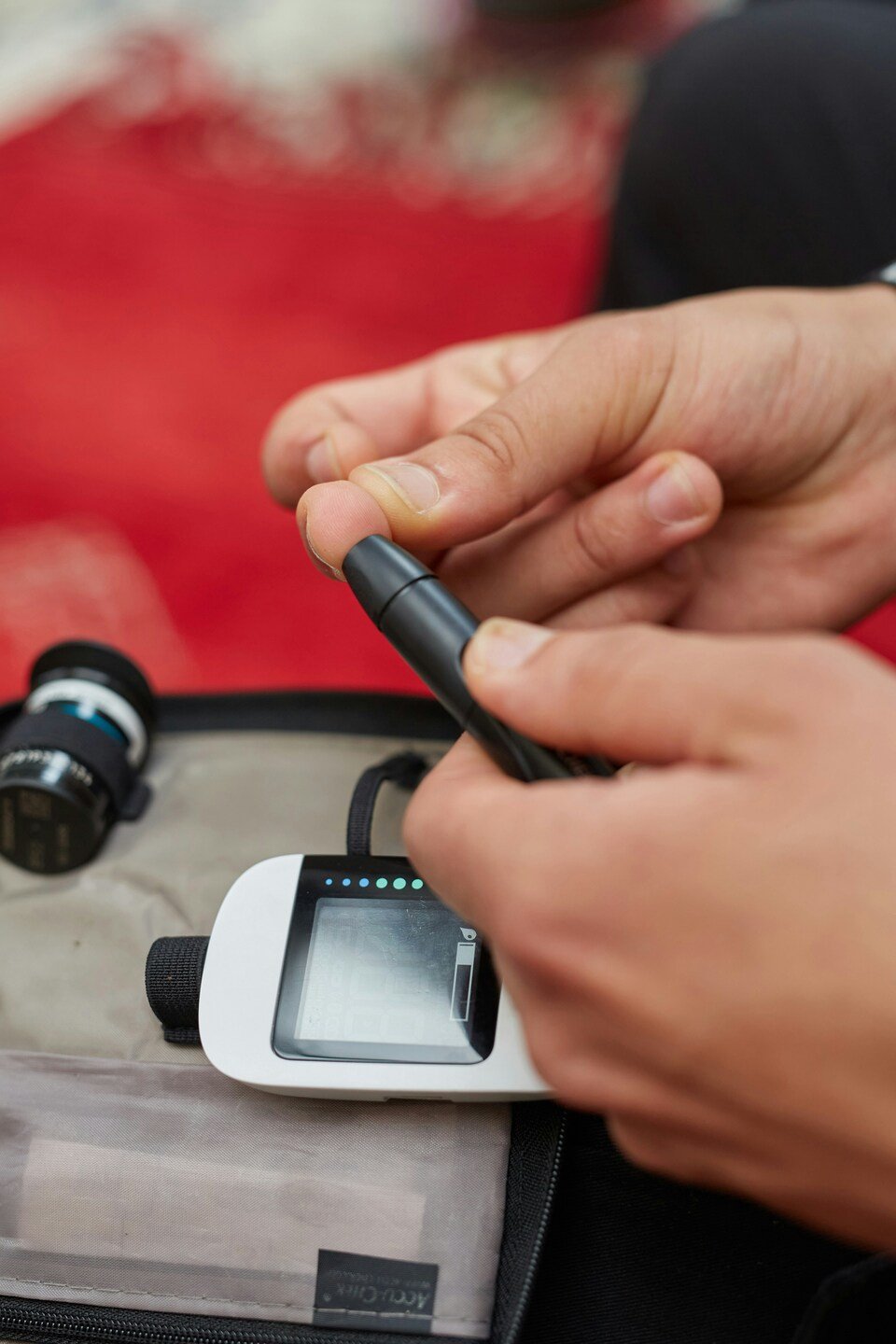
A lancing device is the spring-loaded holder that inserts a lancet and controls the depth of the finger prick used to draw your blood sample. Unlike test strips, which must match your specific meter brand, lancing devices and lancets are generally covered from any manufacturer under Medicare guidelines, giving you more flexibility to choose a device that’s comfortable for your skin and testing habits.
Adjustable-depth lancing devices allow you to select a shallower or deeper puncture depending on your skin thickness and comfort preference, which can make a meaningful difference for patients who test multiple times a day. If your current lancing device has become uncomfortable or difficult to use — due to arthritis, reduced dexterity, or any other reason — mention this to your doctor, since an alternative device or a different testing site option may be appropriate and can be documented on your prescription.
More Supporting Supplies
Carrying Cases and Organization
Many patients find a dedicated carrying case useful for keeping a meter, strips, lancets, and control solution together and protected, particularly for testing away from home. While carrying cases themselves aren’t always billed as a distinct insurance line item the way test strips or a meter would be, many meter and CGM manufacturers include a basic case with the initial device, and some suppliers provide one as a standard accessory with a new meter order.
Sharps Disposal
Used lancets and, for insulin users, syringe needles or pen needles are considered medical sharps waste and require proper disposal rather than simply being thrown in household trash. Many states and municipalities have specific regulations governing sharps disposal, ranging from designated collection sites to mail-back programs to approved sharps containers that can be sealed and discarded through regular waste services once full, depending on local rules. A dedicated, puncture-resistant sharps container is the safest way to collect used lancets and needles between disposal cycles, protecting household members, waste handlers, and anyone else who might come into contact with your trash. If you’re not sure what sharps disposal options are available in your area, your local pharmacy, waste management authority, or public health department can typically provide guidance specific to your state and municipality.
Alcohol Swabs and Skin Prep
Some testing routines, particularly for patients using an insulin pump or a CGM with an insertion process, include alcohol swabs or other skin preparation supplies to help reduce infection risk at the insertion or injection site. These are frequently included as part of a pump or CGM’s ongoing supply kit rather than ordered as a completely separate item.
How Accessories Are Covered Alongside Your Core Supplies
Rather than treating control solution, lancing devices, and other accessories as separate purchases requiring their own insurance verification, Diabetic Discounts Network incorporates these into your overall testing supply request. When our team verifies your coverage for a meter, CGM, or pump, we also confirm what supporting accessories your specific plan covers alongside those core items, so your first order — and your ongoing automatic refills — include everything your prescribed routine actually requires.
When to Reassess Your Accessory Needs
It’s worth revisiting your accessory setup any time your core testing routine changes — a new meter model may use a differently formulated control solution, a change in dexterity or skin sensitivity may call for a different lancing device, and starting a pump or CGM for the first time typically introduces a need for skin-prep supplies that weren’t part of a fingerstick-only routine. Mentioning these changes during a routine doctor’s visit, rather than waiting until an accessory runs out, helps keep the corresponding documentation current.
Getting Started
If you’re setting up testing supplies for the first time, accessories like control solution and a lancing device are typically included as part of your initial request rather than something you need to order separately. If you already have core supplies set up and specifically need to add or replace an accessory — a new lancing device, for example, or additional control solution — you can reach out directly, and our team will confirm what’s covered under your existing plan.
Frequently Asked Questions
Is the control solution covered by insurance?
Yes, control solution is typically covered alongside your meter and test strips under Medicare Part B and most private insurance plans, and is brand-matched to your specific meter and strip combination.
How often should I use a control solution?
Common recommendations include testing when you open a new box of strips, if you suspect an inaccurate reading, if your meter has been dropped or potentially damaged, and periodically as routine maintenance. Your doctor or the meter manufacturer can provide specific guidance for your device.
Do lancing devices need to match my meter brand?
No. Unlike test strips, lancing devices and lancets are generally covered from any manufacturer under Medicare guidelines, so you have flexibility to choose a device that’s comfortable for your testing routine.
What should I do with used lancets and needles?
Used lancets and needles should go into a dedicated, puncture-resistant sharps container rather than regular household trash. Disposal rules vary by state and municipality, so check with your local pharmacy or waste management authority for specific guidance.
Are accessories like carrying cases covered by insurance?
Carrying cases aren’t typically billed as a separate insurance line item, though many meter and CGM orders include a basic case as a standard accessory.
Can I request accessories separately from my main testing supplies?
Yes, though accessories are usually included automatically as part of your initial testing supply request. If you need to add or replace something separately later, our team can confirm what’s covered under your existing plan.
Coverage for diabetic testing accessories depends on your specific insurance plan and the supplies included in your treating physician’s prescription. This page provides general information and is not a guarantee of coverage.